Notes

Before your first track day.

Some of it was harder than I expected, some of it much easier, and almost none of it was the driving.

Read your organizer's rules first. Some tips from someone still figuring it out, so your first day can be about the driving.

What it is

It's called HPDE.

High Performance Driver Education. The first time I heard it I assumed it was something police departments did.

You bring your own car to a racetrack, an instructor sits with you, and you drive for four or five twenty-minute sessions with a group at roughly your pace.

It is not racing. Cars are sorted into run groups by experience, so novices are on track with other novices. The higher groups run solo, and an HPDE is an easy way for an experienced driver to try a new track.

Where to look

Search the organizers

Events are run by organizations that rent the circuit, so search for those rather than the venue. In the southeast: Chin Track Days, Jzilla, Just Track It, Turn One and GRIDLIFE. Also the local chapters of the SCCA, NASA and the national car clubs. MotorsportReg lists most of them in one place.

Organizers, shops and what is on the property →
What to book

A novice group, close to home

Pick the nearest circuit for the first one. The drive matters at the end of the day, when you are tired. Novice or beginner groups include instruction in the price at most organizations. Each one posts its own pricing.

The easy part

Less to worry about than you think.

Four cars parked in the paddock at Atlanta Motorsports Park, numbers taped to their doors, the circuit behind
The paddock at Atlanta Motorsports Park.
Timing

I arrived far too early

If you are driving the car you came in, you need long enough to park and check in. Thirty to forty-five minutes covers it. Add a few minutes more if you need to rent a helmet. Anything earlier is standing around.

Check in

Handled when you get there

Registration, run groups, the schedule and the instructor assignments were all settled before I arrived. If you have not sorted a car number, most organizers have some at check in, and plenty of people just use tape. Pick whatever you like. Nobody minded duplicates at mine.

Pace

You set the pace

No clock, no grid, nobody racing you. You drive at whatever speed suits you, and each session you go a little further into it. Being slow at the start is normal. Nobody is watching, and the drivers who look quick have been coming for longer.

The field

Anybody can be quick

There will be cars far more serious than yours and cars far less. Somebody in a twenty-year-old hatchback disappearing up the road from a supercar is one of the better sights of the day.

People

Turning up on your own

I did not know a single person there. By lunch somebody I had just met had offered me a spot under their canopy, which is roughly how the paddock works.
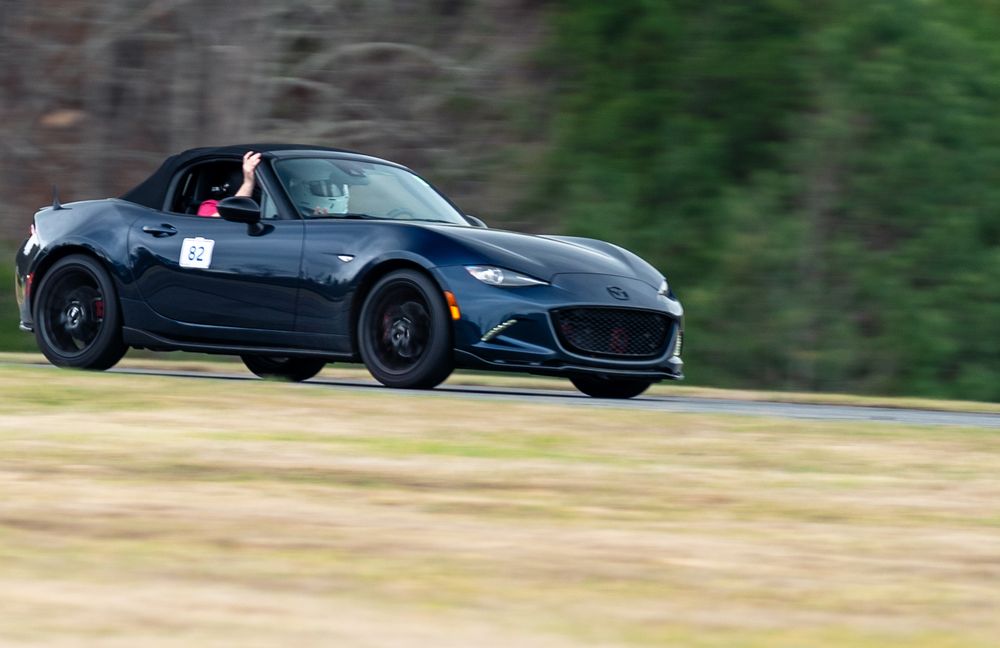
Worth preparing for

The homework I wish I'd done.

None of these is difficult on its own. Together, on a morning with a lot going on, they take attention you would rather spend on the driving.

Track

Learning the track

Where it goes, which way it falls, what is over the crest. Nobody requires you to know any of it in advance, but there is onboard footage of almost every circuit, and if you find a car close to yours the reference points transfer directly. I spent a week on YouTube after my first event. Doing it before would have made it a different day.

Numbers

Corner numbers

The drivers' meeting, your instructor, the conversation in the paddock. All of it refers to turns by number, and knowing a circuit's shape is not the same as knowing which one is five. Learn the big ones first. At AMP that is 1, 4, 6, 11 and 16. At Road Atlanta it is 1, 5, 7, 10a and 10b, and 12.

Flags

Nobody mentioned the flags

I did not expect these at all. Nobody mentioned them beforehand. They are simple. Green is all clear, yellow means no passing, black means come into the pits. There is even a blue “Miata” flag. Ten minutes at home covers all of them.

Stations

Where the flag stations are

The street teaches you to look close. The next turn, the braking zone, the bumper in front. Spot the flag stations in onboard video first and you will find them on the day, and looking for them keeps your eyes a long way up the road, which turns out to be where the speed is.

These notes come from Circuit Villa 29, a villa on the circuit at AMP.

An onboard lap at Atlanta Motorsports Park. Most of what you will find looks like this, with the data laid over it.

Non-negotiable

The two that can stop you going.

Tech

Inspection, and whatever it finds

Your car needs a technical inspection, usually dated within thirty days of the event. Any decent shop will do it. You can do your own if you are competent and the organizer allows it, though leaving fluid on the circuit is the fastest way to be unpopular. Book early, so a problem is something you fix rather than a reason not to go.

Helmet

A current-rated helmet

Rentals are usually available and are fine for a first day, which is a good way to find out whether you want one of your own. If you buy, the current Snell rating is SA2025 and it will be accepted the longest. SA2020 is still fine, and older ratings do age out. Check the organizer's rulebook before you spend anything. Correct fit is critical to safety, and it varies by head shape and between brands, so this is the one item to try on before you buy. Discovery Parts is on the property at AMP and carries Arai, Bell, Stilo and Sparco.

Book both early to avoid stress later.

Worth doing anyway

Brake fluid and alignment.

Brakes

Fresh fluid

Street fluid absorbs water and water boils. A long pedal halfway through a session is unpleasant and entirely avoidable. A flush with a high temperature fluid is inexpensive, and it is the cheapest confidence you can buy.

Alignment

A performance alignment

Most road cars are set up to be stable and to wear tires slowly. A modest change makes the car turn better and stops the outside edges of the front tires doing all the work. Not required, and close to inevitable if you go back. My mechanic sent me to Gran Turismo East, and their sticker turns up all over the paddock.

Before you go

At home.

All of it is quick, and none of it can be done in the paddock.

Insurance

Decide before you drive

Your street policy almost certainly excludes track use. Several brokers write coverage for a single day, including Traction here in Atlanta. What you need depends on the car and on what losing it would mean, so give it ten minutes rather than a shrug.

Loose items

Empty the car

Floor mats, everything in the doors and cupholders, everything in the trunk. Tech will check. Anything loose can move under braking, end up airborne, or find its way to the pedals.

Tow hook

Find it and fit it

Most cars have one in the trunk. Screw it into the front of the car before you leave and forget about it. You will probably never use it. I did not plan on using mine either.

Tires

Pack a pressure gauge

Pressures climb a long way once the tires are hot and you will be letting air out between sessions. Your instructor will tell you what to aim for. Leave the valve caps off for the day, since refitting them each time just slows you down, and know where the nearest air pump is for the drive home.

Clothing

No synthetic fibers

Long sleeves and long pants are highly recommended, in cotton, denim or wool. Nothing stretchy. Closed toe shoes with a thin sole, so Sambas, Tigers, Chucks or Vans rather than anything cushioned.

On the day

Through the gates.

A two-seat sports car on track with two helmeted occupants, the instructor's arm raised
In novice groups the right-hand seat is an instructor.Photo © Zach Rigg
Passenger

Someone rides with you

Novice groups put an instructor in the passenger seat. They talk you round for the first sessions, and it is the most useful part of a first day.

Meeting

The drivers’ meeting

Everyone gathers before the first session. The corner numbers, the flags and the passing rules all get explained, which goes a lot faster if you have seen them before.

Classroom

Short sessions through the day

Often mandatory. The instructors are frequently racers themselves. I have learned something I did not expect every time.

Passing

Point-bys

Faster cars will catch you, and you wave them through at the places the organizer has set out. It is the thing most first-timers worry about. Traffic awareness keeps getting better for years.

Stamina

Sessions are tiring

Twenty minutes of that concentration is not like twenty minutes of anything else. Hydration is crucial, because focus is what keeps you from making mistakes. In summer I drink a bottle of water every session.

Fuel

Fuel goes quickly

On the road you hold full throttle for a few seconds on an on-ramp. On track you do it every lap, and economy drops into single digits. Check where you are at lunchtime and fill again during the longest break if it looks tight. Filling up on the way in saves you doing it twice.

A head start

Karting first.

A first track day will not teach you what the limit feels like, because finding it in your own car is expensive to get wrong. A kart teaches the same lesson cheaply. It slides, it recovers, and you learn what the moment before a slide feels like without any of the consequences.

A few sessions cost a fraction of a set of tires. Do it a few times before your first HPDE and you arrive with a working understanding of grip, braking and weight transfer.

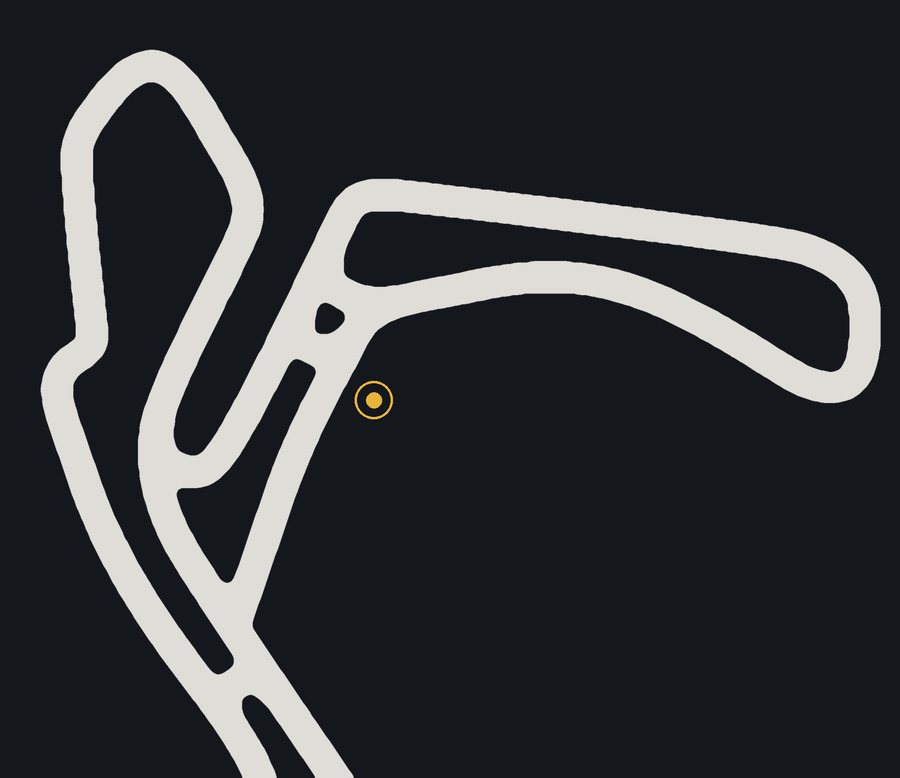
Map of the kart circuit at Atlanta Motorsports Park, with Circuit Villa 29 marked on it
The kart circuit. The long climb, the drop into the hairpin, and the climb back out.
Where

Atlanta Motorsports Park

The kart circuit at AMP has forty-three feet of elevation change, and the rentals are quick enough that the corners arrive in a hurry. Blind crests, a long climb, and a drop into a hairpin. The elevation and the speed are why the lessons carry over.

Company

Bring someone

Take a friend, your partner, one of your kids. Chasing somebody teaches you more in half an hour than driving alone does, because a car in front shows you where the time is. It also turns a session into a trip.

Leagues

You can race these

Public karting has a competition side anybody can enter. Endurance races run in teams of two to four over four to eight hours, with stints, pit stops and a result at the end. League nights run through the season on AMP’s own rental karts. It is real racing, and you need nothing but closed toe shoes.

Who

There is a minimum age

AMP sets a minimum age and height to drive solo, and a lower pair to ride the two-seater, and posts both on its page. Karts run most of the week, year round.

Where this comes from

There is a villa on the circuit.

Circuit Villa 29 sits on the Carousel at Atlanta Motorsports Park. Three levels, a conditioned garage, and balconies over both circuits. We will be renting it from early 2027.

Which answers the drive. The garage is at track level and the paddock is a short walk, so the morning has no drive in it and neither does the end of the day. You unload once, and when the last session is over you are already home.

See the villa